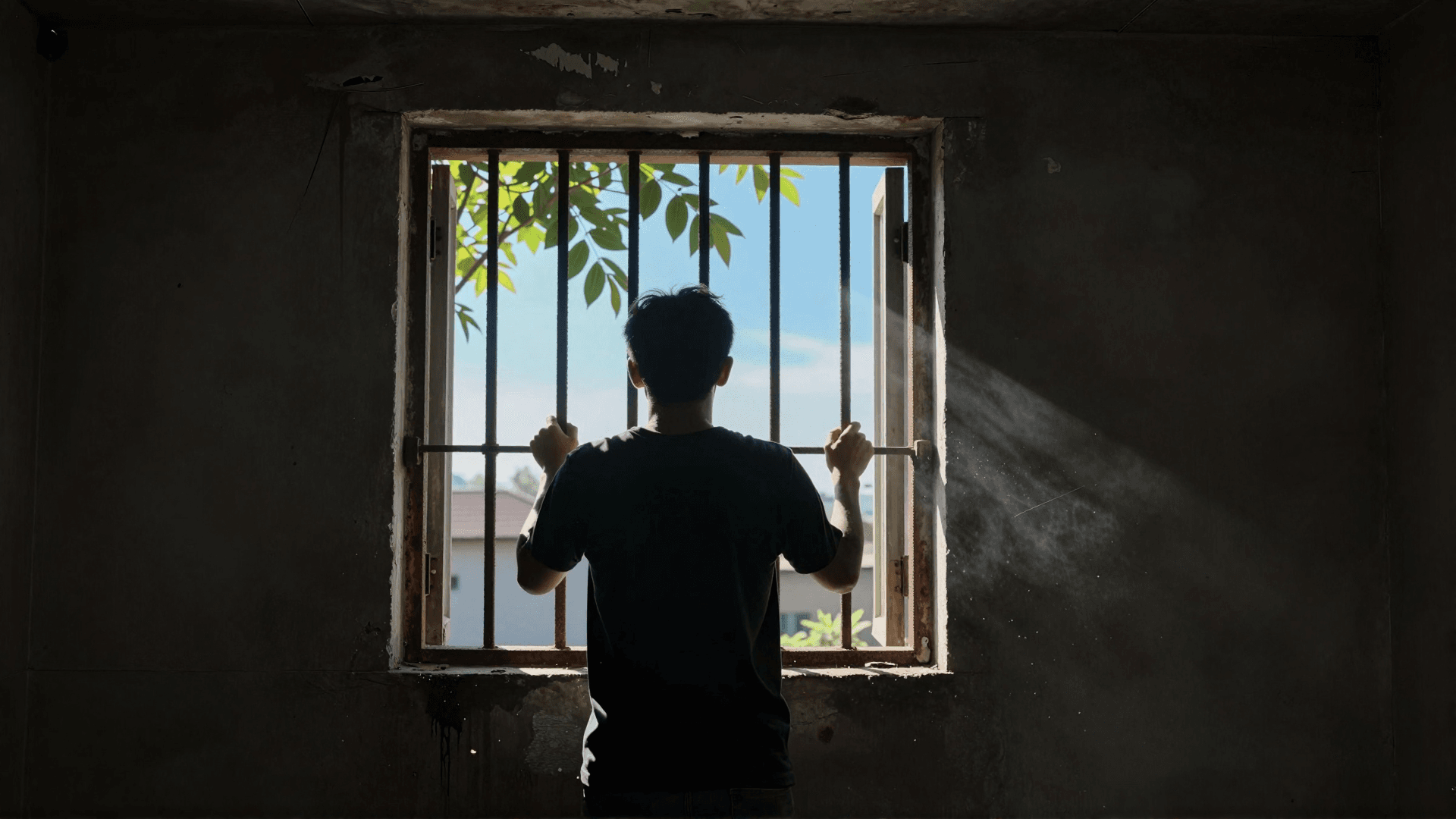
Have you ever woken up in a cold sweat after dreaming of being trapped in a room with no exit? This common nightmare plagues many of us, and its meaning runs deeper than simple anxiety. In Islamic dream interpretation and modern psychology, dreams of confinement reveal profound truths about our waking lives—truths about the invisible cages we build for ourselves and the spiritual freedom we long to reclaim.
The Symbolism of Confinement
When we dream of being locked in a room, the space itself carries rich symbolic meaning:
The Room as Your Comfort Zone A room represents the boundaries we've created—whether by choice or circumstance. It may be the comfort of routine, the security of a familiar job, or the safety of a relationship that no longer serves us.
The Lock as Fear The locked door symbolizes the barriers we perceive between ourselves and our true desires. These barriers may be real—financial obligations, family responsibilities—or they may be self-imposed—fear of failure, fear of judgment, fear of change.
The Search for an Exit as Longing Your frantic search for a way out reflects your subconscious longing for freedom, growth, and authenticity. You sense that something is wrong, and your soul is calling for change.
Common Scenarios and Their Meanings
Let us explore the most frequent variations of this dream and their interpretations.
Scenario 1: Trapped in a Familiar Room
If you dream of being confined in a room you recognize—your childhood bedroom, your current home, or a workplace:
- Stagnation in Daily Life: This reflects feelings of being stuck in a monotonous routine. You may feel that life has become repetitive, draining your energy and creativity.
- Unfulfilled Potential: The room represents the "box" you've put yourself in. Your subconscious is telling you that you are capable of more than you're currently achieving.
- Fear of the Unknown: Even though you're unhappy, the familiar room feels safer than venturing into the unknown.
Scenario 2: Trapped in an Elevator or Basement
Dreaming of being confined in an elevator that won't move or a dark basement:
- Feeling Stuck in a Rut: An elevator that won't go up or down represents feeling stagnant in your career or personal life. You're not making progress, and you feel powerless to change.
- Emotional Isolation: A dark basement symbolizes feeling unseen or unheard. You may be going through a difficult time but feel like no one understands or can help you.
- Spiritual Darkness: In Islamic interpretation, darkness can represent spiritual neglect. You may have drifted from your faith or stopped nourishing your soul.
Scenario 3: Trying to Unlock a Door but Failing
When you're desperately searching for keys or trying to open a door that won't budge:
- Lack of Direction: You want to make a change but don't know where to start. You're looking for "the key"—the solution, the opportunity, or the courage—to unlock a new chapter.
- Self-Sabotage: Sometimes the door won't open because we're not ready to face what's on the other side. Fear of failure or success can keep us trapped.
- Divine Timing: In Islamic tradition, a locked door can also indicate that it's not yet the right time for change. Allah knows what's best for us, even when we can't see it.
Scenario 4: Finding an Unexpected Exit
If you eventually find a way out—through a window, a hidden door, or by breaking through a wall:
- Hope and Possibility: This is a positive sign! It means that even when things seem impossible, there is always a way forward.
- Inner Strength: Finding an exit reflects your inner resilience and resourcefulness. You have the strength to overcome obstacles.
- Divine Guidance: The unexpected path may represent Allah guiding you in ways you hadn't anticipated.
The Spiritual Message: You Hold the Key
Dreams of confinement are not meant to scare us—they are meant to wake us up. The room is not the problem; the problem is our refusal to acknowledge that we're trapped.
Ask Yourself:
- What in my life feels like a "locked room"?
- What am I avoiding or suppressing?
- What changes do I want to make but haven't yet?
The key to freedom is not found in external circumstances—it's found within you. As the Prophet Muhammad (peace be upon him) said:
"Verily, Allah does not change the condition of a people until they change what is in themselves."
What to Do After Such Dreams
Islam provides powerful tools for breaking free from spiritual and emotional confinement:
1. Seek Ease Through Du'a
Recite the Du'a for Ease when feeling overwhelmed:
"Allahumma la sahla illa ma ja'altahu sahla. Wa anta taj'al al-hazna idha shi'ta sahla." (O Allah, nothing is difficult except what You make difficult. And You make the difficult easy when You wish.)
2. Alleviate Anxiety
Turn to Allah with the Du'a for Anxiety:
"Allahumma inni a'udhu bika min al-hammi wal-huzni, wal-'ajzi wal-kasali, wal-bukhli wal-jubni, wa dal'id-dayni, wa ghalabatir-rijal." (O Allah, I seek refuge in You from anxiety and sorrow, weakness and laziness, miserliness and cowardice, the burden of debts, and from being overpowered by men.)
3. Perform Istikhara for Direction
When facing important decisions, perform the Istikhara prayer sincerely. Allah will guide your heart toward what is best for you.
4. Break Free Through Action
- Take small steps toward change—even a baby step is progress
- Seek support from trusted friends, family, or a spiritual advisor
- Remind yourself that change is inevitable and growth requires courage
Related Resources
- Du'a for Ease - Seek relief from difficulties
- Du'a for Anxiety - Find peace from worry and stress
- Istikhara Du'a - Seek divine guidance for life decisions
Conclusion
Dreams of being trapped are invitations to examine our lives and make choices that align with our true selves. The room is not a prison—it's a mirror reflecting what we need to change.
Remember: You are not defined by your circumstances. You have the power to unlock any door and step into the freedom Allah intends for you.
May Allah grant you the courage to face your fears, the wisdom to make the right choices, and the peace that comes from trusting in His plan.