The recent state funeral of Iran's Supreme Leader Ayatollah Ali Khamenei has captured global attention, not only for its geopolitical significance but also for the unique blend of religious ritual and political symbolism it represents. As the late leader's body made its journey through Iraq's holy cities of Najaf and Karbala before final interment in Mashhad's Imam Reza shrine, the world witnessed a funeral that transcends mere ceremony—it is a living expression of Iran's identity, faith, and power.
The Event: A Funeral of Unprecedented Scale
Khamenei's funeral was no ordinary farewell. The multi-day procession involved:
- Transport through Iraq's sacred Shi'a sites
- Public gatherings drawing millions of mourners
- Final burial at Mashhad's Imam Reza shrine—one of the holiest sites in Shi'a Islam
While this transnational journey was unprecedented, it reflected deep-seated religious traditions and political imperatives that have shaped Iran since the 1979 Islamic Revolution.
Core Islamic Burial Principles
Islamic funeral traditions are rooted in the Quran and the example of the Prophet Muhammad (peace be upon him), emphasizing simplicity, speed, and dignity.
The Principle of Speed (Al-Taqarrub)
Islam teaches that the deceased should be buried as soon as possible, ideally within 24 hours. This principle reflects several beliefs:
- Respect for the deceased, who should not remain unburied
- Trust in Allah's plan for the soul's journey
- Humility, as all are equal in death
The Prophet Muhammad (peace be upon him) said:
"Hasten the burial of the dead, for if he was righteous, you have helped him to reach his reward. If he was otherwise, you have rid yourselves of an evil."
Khamenei's delayed interment, while unusual, was justified by wartime security concerns—a rare exception to the rule.
Simplicity in Death
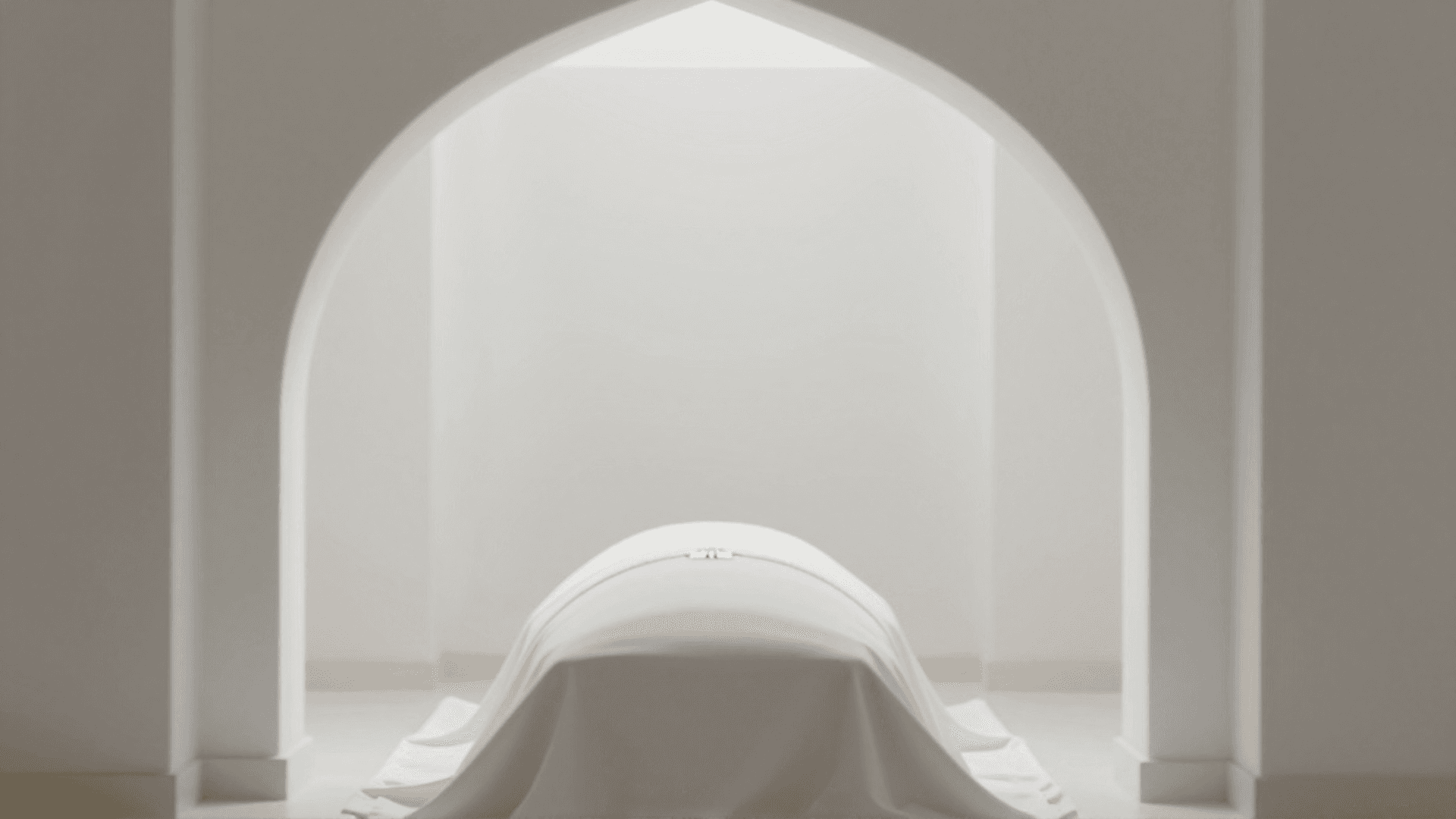
Islam forbids elaborate funerals or grave markers that denote status. The deceased is wrapped in a simple white shroud (kafan), symbolizing equality before Allah. The Prophet taught:
"Do not build structures over graves, do not use those graves as places of worship, and do not visit them too frequently."
The Prayer of the Dead (Salat al-Janazah)
A special congregational prayer is performed for the deceased, seeking Allah's mercy and forgiveness. This prayer has its own unique format and is considered one of the most important acts of charity (sadaqah) one can perform.
The "Shahid" (Martyr) Culture in Iran
In Iran, the concept of "Shahid"—martyrdom—occupies a central place in both religious and national identity.
What Makes a Shahid?
A martyr in Shi'a Islam is someone who dies while defending the faith or the community. This includes:
- Soldiers killed in battle
- Individuals who sacrifice their lives for a just cause
- Those who suffer persecution for their beliefs
Martyr Privileges
Martyrs are believed to receive special status in the Hereafter:
- Their sins are forgiven
- They intercede on behalf of their families on Judgment Day
- Their families receive special honors and state support
In Iran, martyrdom carries tangible benefits:
- Free education for children
- Housing assistance
- Employment preferences
- Social prestige
The Funeral of a Shahid
The funeral of a martyr is a moment of national commemoration:
- The body may be carried through the streets in a public display
- Speeches honor the martyr's sacrifice
- The event becomes a rallying point for national unity
The Religious Significance of Mashhad
Khamenei's burial at Mashhad's Imam Reza shrine carries profound religious weight in Shi'a tradition.
Imam Reza: The Eighth Imam
Imam Reza is revered as the eighth Imam in Twelver Shi'ism. His shrine in Mashhad is one of the most visited pilgrimage sites in the Islamic world, second only to Mecca and Medina.
Burial Near a Saint
In Shi'a tradition, burial near a holy figure is considered highly auspicious. It symbolizes:
- Spiritual proximity to the saint
- The deceased's desire for intercession
- A statement of faith and piety
For a national leader, burial at such a site is a powerful assertion of religious legitimacy and legacy.
Historical Evolution of Iranian Funerals
Iran's funeral practices have evolved significantly over time, reflecting broader societal changes.
The Pahlavi Era (1925-1979)
Under the Shah's regime, funerals were often Westernized:
- Formal, state-sponsored events
- Limited religious symbolism
- Emphasis on secular national identity
The Islamic Revolution (1979-Present)
After the revolution, funerals became distinctly Islamic:
- Public, mass gatherings
- Strong religious rituals and symbolism
- Integration of martyrdom narratives
- Emphasis on collective piety over individual status
Conclusion
The funeral of Ayatollah Khamenei is more than a national event—it is a window into the soul of a nation where religion and politics are inseparable. From the speed of burial to the symbolism of martyrdom, every ritual carries layers of meaning that reflect Iran's complex history and unwavering faith.
Understanding these traditions helps us appreciate not only the event itself but also the deeply held beliefs that shape one of the world's most influential nations.