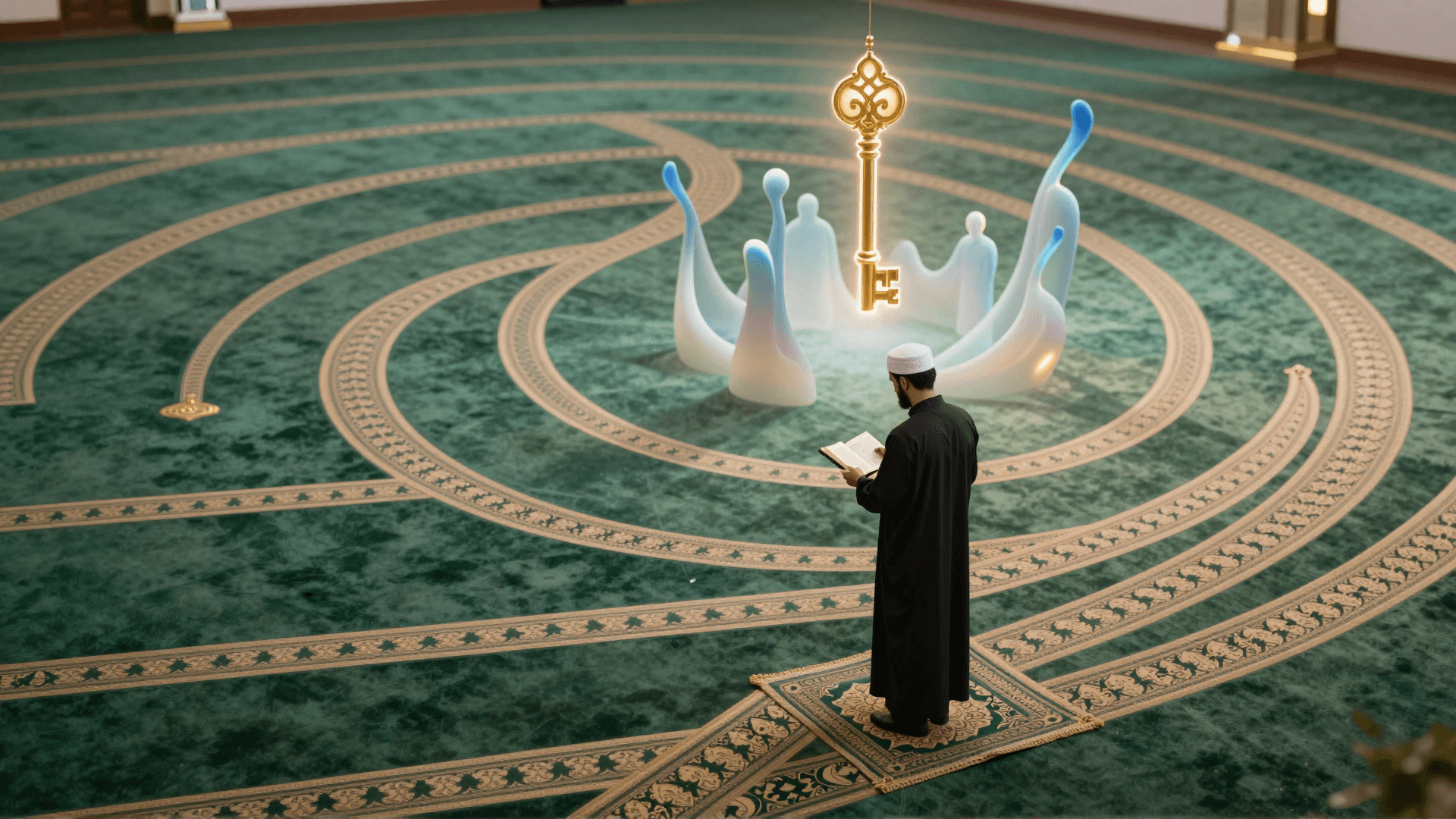
Have you ever felt like your entire world was shifting beneath your feet? Like everything you knew suddenly became uncertain?
I remember that feeling vividly. It was a time when multiple changes hit my life simultaneously—career uncertainty, relocation to a new city, and questions about my spiritual path. The ground felt unstable, and I struggled to find solid footing.
If you're experiencing similar transition periods right now, know this: you're not alone. And more importantly, Islam provides profound guidance for navigating these challenging times.
The Beginning: Recognizing the Challenge
It started subtly. Small changes that seemed manageable on their own, but together created an overwhelming wave of uncertainty. My job situation became unstable. Friends were moving away. Even my daily routines felt disrupted.
At first, I tried to handle it all myself. I made plans, created schedules, and attempted to control every variable. But the more I tried to force stability, the more elusive it became.
The Realization
One evening, during Maghrib prayer, something clicked. I realized I had been approaching these transition periods from the wrong angle. I was trying to control what was ultimately beyond my control, while neglecting what truly mattered: my relationship with Allah.
The Quran reminds us:
"And whoever fears Allah - He will make for him a way out and provide for him from where he does not expect." (Quran 65:2-3)
This verse became my anchor during those turbulent months.
The Struggle: Seeking Solutions
Like many Muslims facing transition periods, I initially sought solutions in all the wrong places:
Excessive Planning
I created detailed five-year plans, color-coded calendars, and backup strategies for every scenario. While planning itself isn't wrong (the Prophet ﷺ emphasized preparation), my approach stemmed from anxiety rather than trust in Allah.
Comparing Myself to Others
Social media didn't help. Seeing peers seemingly thriving while I stumbled through uncertainty intensified my feelings of inadequacy. I wondered why my path seemed so much harder.
Neglecting Spiritual Practices
Perhaps most damaging, my spiritual practices suffered. Prayer became rushed. Quran recitation decreased. Dhikr felt mechanical rather than heartfelt. I was spiritually depleting myself exactly when I needed strength most.
The Turning Point: Finding Islamic Guidance
The breakthrough came during a conversation with an elderly imam at our local mosque. After hearing my struggles, he shared wisdom that transformed my perspective:
"My son," he said gently, "you are treating transition as a problem to solve, when it is actually an invitation to grow closer to Allah."
Understanding Transition in Islamic Context
Islam teaches us that life is inherently dynamic. Change is not an anomaly; it's the natural state of existence. The Quran repeatedly emphasizes this reality:
"Every soul will taste death. Then to Us will you be returned." (Quran 29:57)
This verse isn't just about physical death—it's a reminder that everything in this dunya (worldly life) is temporary. Transitions are reminders of this truth, calling us to prepare for the eternal.
Three Key Islamic Principles for Navigating Change
1. Tawakkul (Trust in Allah)
Tawakkul doesn't mean passivity. It means doing your part while trusting Allah with the outcome. The Prophet ﷺ taught us to "tie your camel" (take action) while placing ultimate trust in Allah.
During my transition periods, this meant:
- Continuing job applications while trusting Allah's timing
- Building community in my new city while accepting loneliness as temporary
- Maintaining spiritual practices even when they felt difficult
2. Sabr (Patience and Perseverance)
Sabr isn't passive waiting—it's active endurance with faith. It's choosing to remain steadfast despite difficulties.
The Quran promises:
"Indeed, Allah is with the patient." (Quran 2:153)
This promise became my lifeline. Knowing Allah was with me during those lonely moments provided comfort no human companionship could match.
3. Istikhara (Seeking Divine Guidance)
For major decisions during transition periods, I began performing Salat al-Istikhara regularly. This prayer asks Allah to guide us toward what's best, even if it differs from our desires.
Learn more about Istikhara prayer →
The Resolution: Growth and Transformation
Slowly, things began to shift—not because circumstances changed dramatically, but because I changed.
Practical Steps That Helped
Morning Routine Restructuring
I established a consistent morning routine centered on spiritual practices:
- Fajr prayer on time, followed by 15 minutes of Quran recitation
- Morning adhkar (remembrances) with full presence
- Brief journaling to reflect on gratitude and intentions
This routine anchored my days, providing stability regardless of external chaos.
Community Building
Instead of isolating myself, I actively sought Muslim community:
- Joined a local study circle
- Volunteered at the mosque
- Reached out to other Muslims experiencing similar transitions
These connections provided both practical support and spiritual encouragement.
Reframing Challenges as Opportunities
Rather than viewing transitions as obstacles, I began seeing them as opportunities for growth:
- Career uncertainty → Chance to explore aligned work
- Relocation → Opportunity to build intentional community
- Spiritual dryness → Invitation to deepen authentic connection with Allah
The Unexpected Blessings
Looking back, those difficult transition periods brought unexpected blessings:
- Deeper Faith: My relationship with Allah became more authentic and resilient
- Clearer Purpose: Uncertainty forced me to clarify my values and priorities
- Stronger Community: I built meaningful connections I wouldn't have otherwise
- Increased Empathy: Experiencing struggle made me more compassionate toward others
Lessons Learned: Advice for Others
If you're currently navigating transition periods, here's what I wish someone had told me:
1. Embrace the Discomfort
Transition periods are uncomfortable by nature. Don't try to eliminate the discomfort—learn to sit with it. Some of my deepest spiritual insights came during those uncomfortable moments of uncertainty.
2. Maintain Your Spiritual Foundation
When everything else feels unstable, your spiritual practices become your anchor. Even if prayer feels difficult, show up. Even if Quran recitation feels empty, keep reading. Consistency matters more than intensity.
Recite these duas during difficult times:
Arabic:
اللَّهُمَّ لاَ سَهْلَ إِلاَّ مَا جَعَلْتَهُ سَهْلاً وَأَنْتَ تَجْعَلُ الْحَزْنَ إِذَا شِئْتَ سَهْلاً
Transliteration: Allahumma la sahla illa ma ja'altahu sahlan, wa anta taj'alul-hazna idha shi'ta sahlan
Translation: "O Allah, there is no ease except in that which You have made easy, and You make the difficulty, if You wish, easy."
Recite whenever facing challenges or difficult transitions
3. Seek Knowledge and Guidance
Don't navigate transition periods alone. Seek knowledge from trusted scholars, guidance from experienced mentors, and support from fellow believers.
Consider reading:
- Stories of the Prophets—they faced immense transitions
- Biographies of righteous predecessors who endured trials
- Contemporary Muslim voices sharing their journeys
Browse Islamic dream interpretations for guidance →
4. Practice Gratitude Actively
Gratitude doesn't deny difficulty—it reframes it. Each day, identify three things you're grateful for, even during hard times. This practice rewires your brain to notice blessings alongside challenges.
5. Trust the Process
Perhaps most importantly, trust that Allah knows what He's doing. These transition periods aren't random—they're purposeful. They're shaping you into who you need to become.
The Quran assures us:
"But perhaps you hate a thing and it is good for you; and perhaps you love a thing and it is bad for you. And Allah knows, while you know not." (Quran 2:216)
Moving Forward with Confidence
Today, looking back on those transition periods, I feel profound gratitude. They were among the most challenging seasons of my life, but also the most transformative.
If you're in the midst of your own transition periods, remember:
- You're not alone—countless Muslims have walked this path before you
- You're not failing—struggle is part of the journey, not evidence of failure
- You're growing—even when it doesn't feel like it, you're becoming stronger
- Allah is with you—His promise is true, His wisdom is perfect, His timing is flawless
May Allah grant you ease during your transition periods, patience during trials, and clarity during confusion. May He make every change a step closer to Him, and every challenge an opportunity for growth.
Ameen.